So I already have a boat prop, but now it’s time to build a boat for it. My plan is to build a very basic boat I can use in my pool. I will use a cheap toy boat from Wal-Mart as the hull, a DC motor that I saved from my destroyed RC helicopter, a 4-in-1 receiver box from the same helicopter, an old futaba servo, and I will use the transmitter that came with the helicopter.
After doing some research on RC boats I found that there are two common ways of connecting the motor to the prop. The first is direct drive – this is where there is a universal joint at the motor that is connected to a solid shaft that goes through a stuffing tube. After coming out of the stuffing tube there is another universal joint which is followed by a threaded rod that has the prop on it. The universal joints are so the motor and prop can be parallel to the hull but the shaft can be angled. The other method uses a flex shaft so the stuffing tube can be curved. The motor and prop are still parallel with the hull, there are just no universals. I will be doing my own version of the solid shaft method. There will be no universals joints, per se. On the prop end there will be no universal at all. It will just be the shaft with the prop on it. This means the prop will not be parallel to the boat. I thought long and hard on how to connect the shaft to the motor – I was worried that if I had no universal and just mounted the shaft directly to the motor that I would have to mount the motor in the exact angle of the shaft or there might be problems. I really didn’t want to do this because I didn’t want to have to worry about mounting it perfect. I knew I needed some type of universal, but just didn’t know what I’d use. I toyed around in my mind with the idea of using a universal joint that you would use with a 1/4″ ratchet/socket, but I didn’t like it too much. If I couldn’t think of anything else I would’ve done that. As I was thinking about how to connect the two, some gas line that was laying on my desk caught my eye. Yes! I could just slip the 1/8″ rubber tubing over the pinion gear on my motor and then onto my shaft. The rubber will act as a good enough universal so that I could mount my motor a degree or two out of line of my shaft and still be okay. I knew this would work well for me, so I went with it.
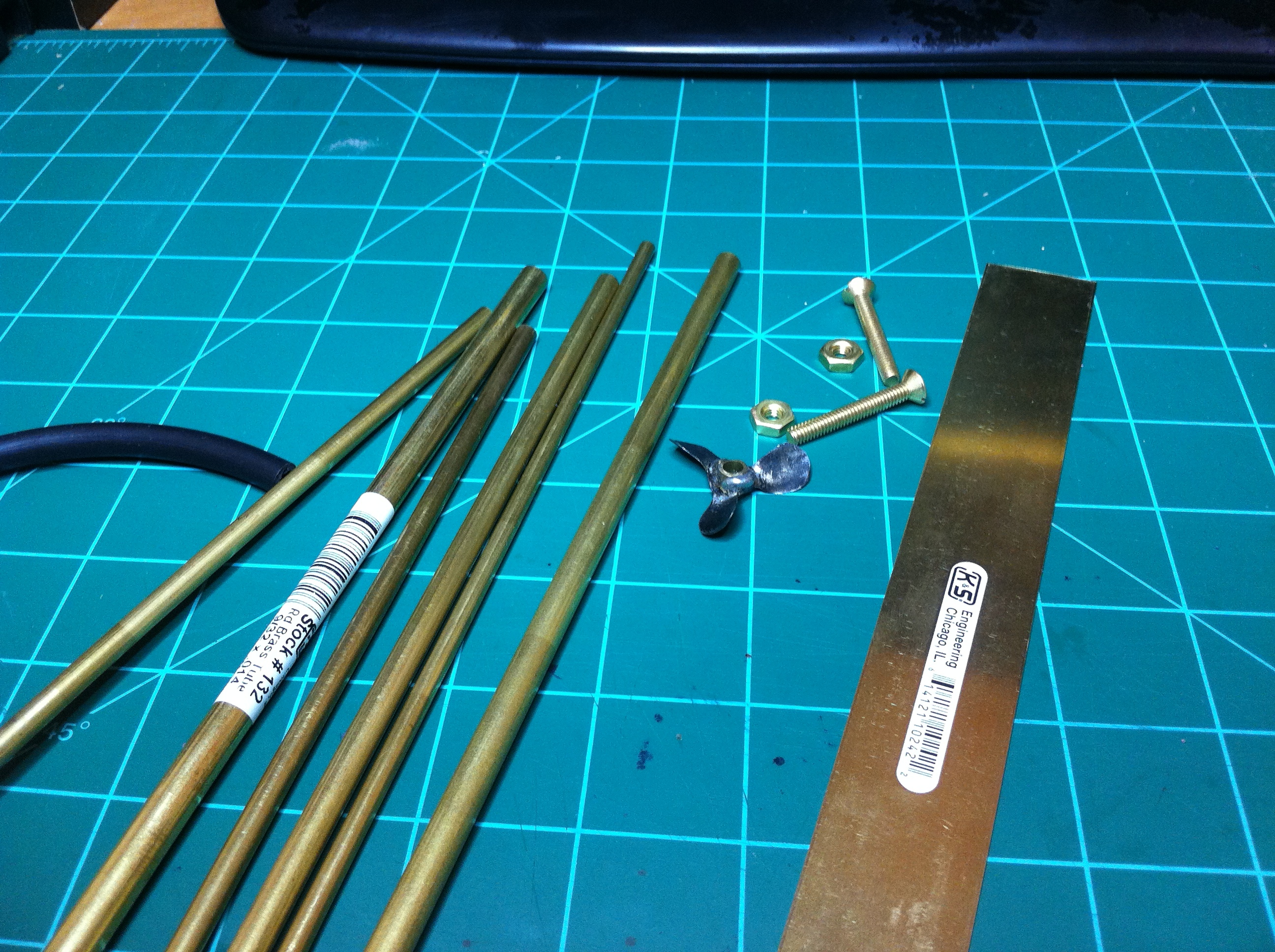
Next time I got to the hardware store I went to their awesome K&S engineering stand for brass tubing. I decided to use 3/16″ brass tubing for the shaft because it would give me a snug fit when I pressed it into the 1/8″ rubber tubing. I bought a 3/16″ tube (the shaft) and the next three larger sizes of tube that telescoped well. I didn’t really pay attention to the dimensions as they were unimportant to me, I just needed them to fit inside of each other snugly. These three pieces of tubing will make up the stuffing tube.
Shaft
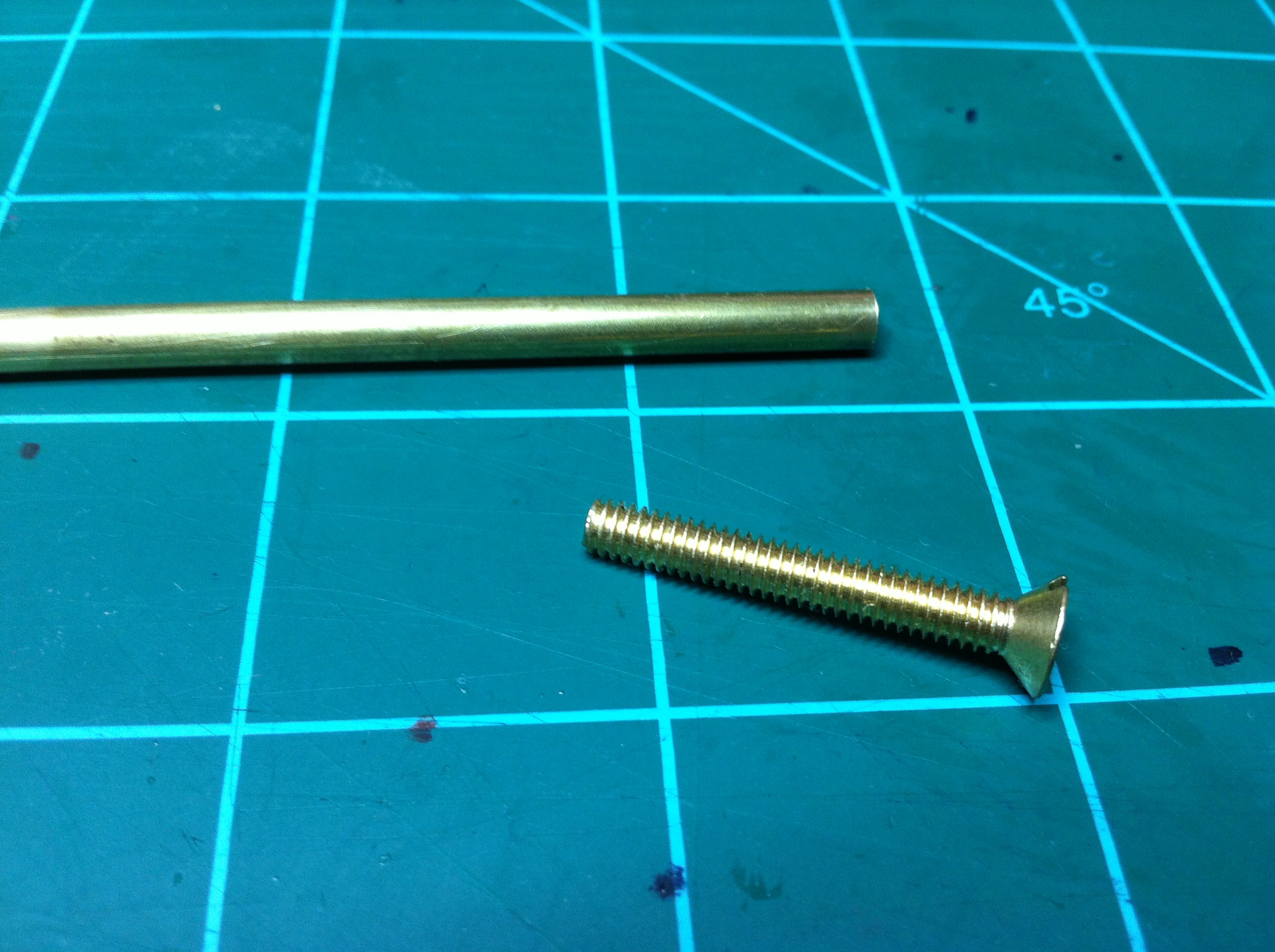
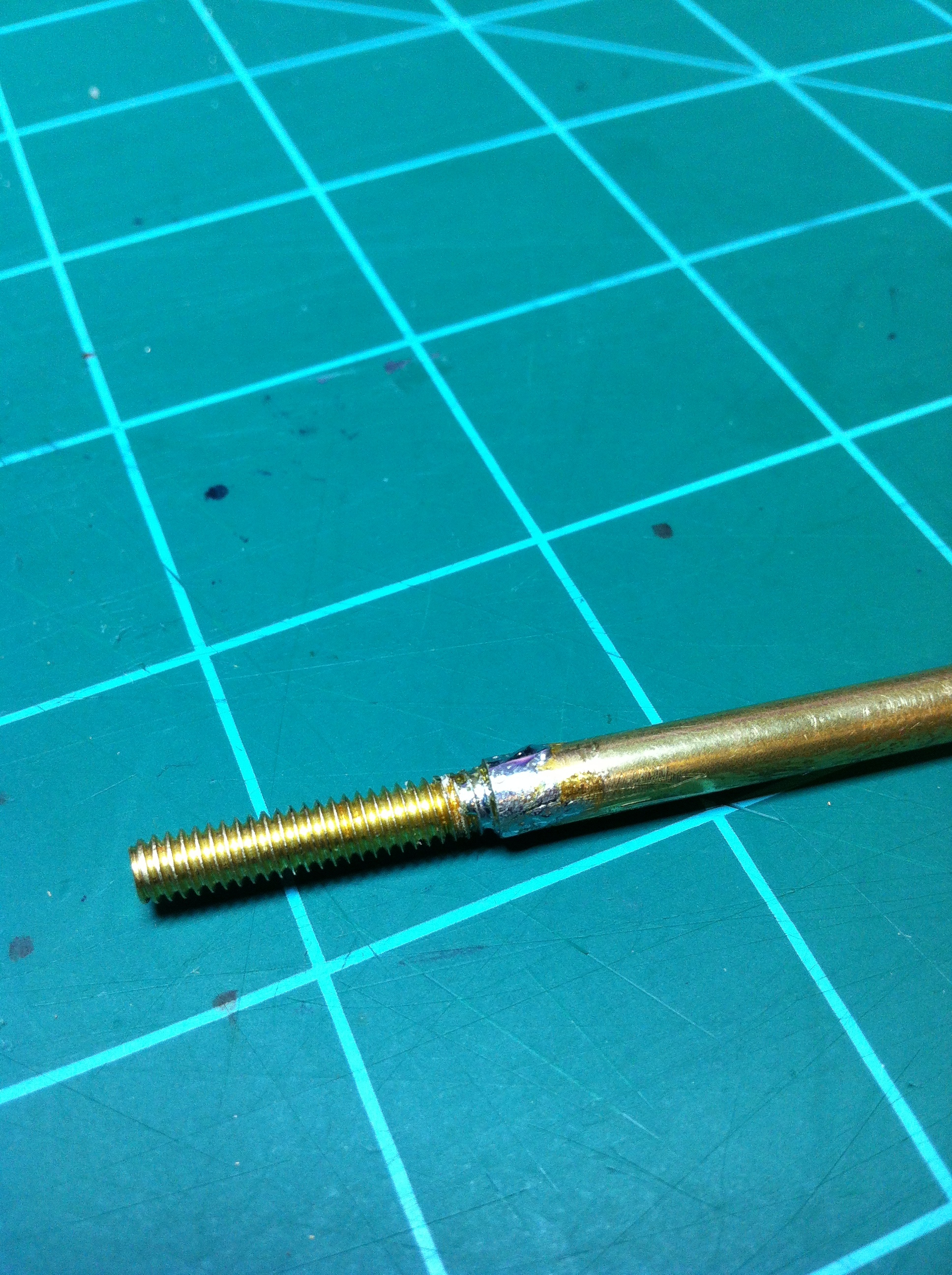
Like I said, the shaft will be made out of 3/16″ brass tubing. The shaft will be 12″ long because, well, that’s how long of a piece I bought. While at the hardware store I got a brass 1 1/2″ long 8/32 machine screw. To build the shaft I cut the head off of the machine screw, stuck the screw into the 3/16″ tube about 1/4″ – 1/2″, and then I soldered it. To mount the prop I will put a nut on the 8/32, followed by the prop, and then another nut. Since I was going to use the gas line that was on my desk for another project, I had to buy some at the hardware store. I looked around for some 1/8″ fuel line at this particular hardware store so I bought some 1/8″ vacuum tube. It will work just as good as fuel line would, I’m sure.
Stuffing Tube
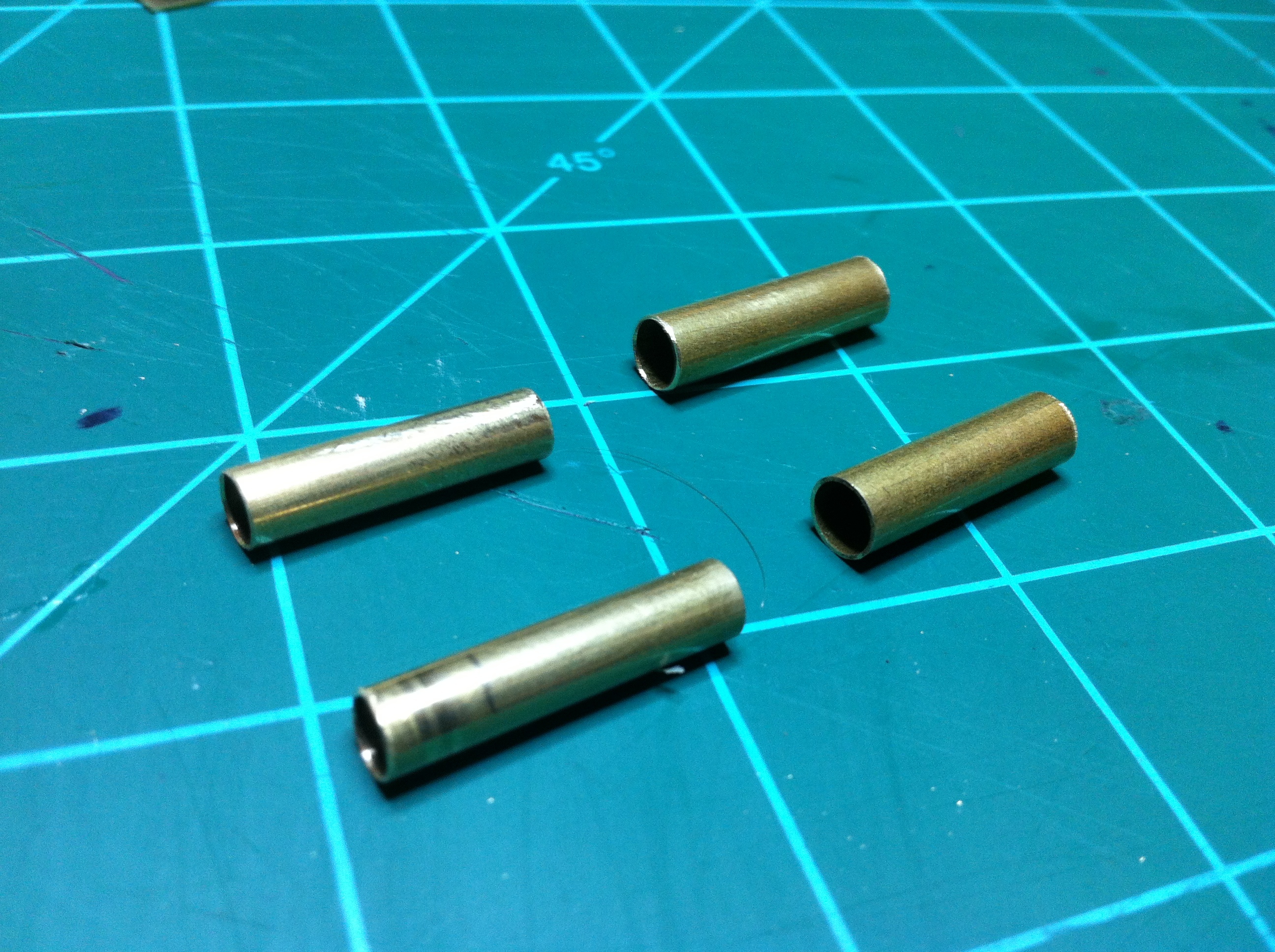
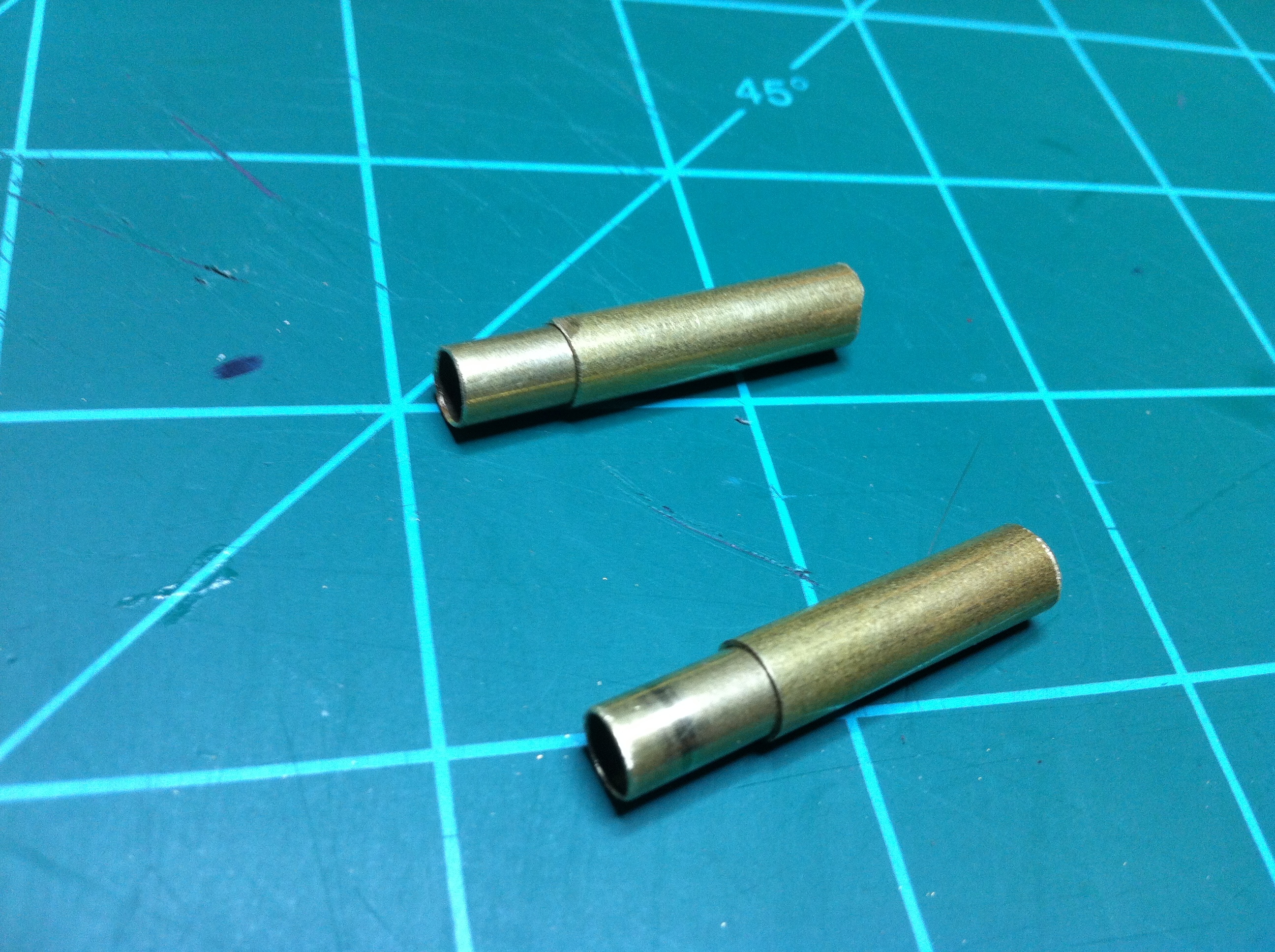
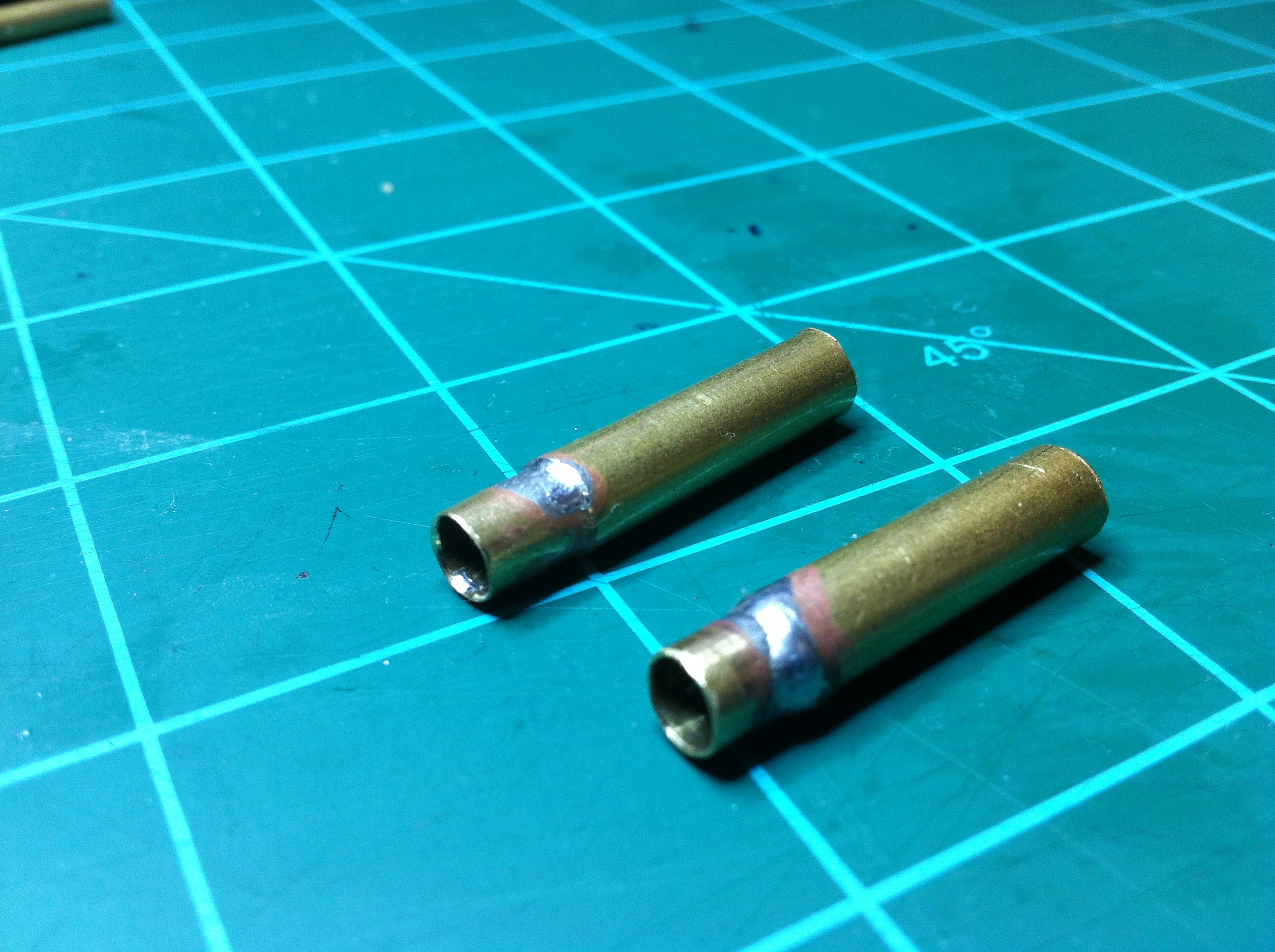
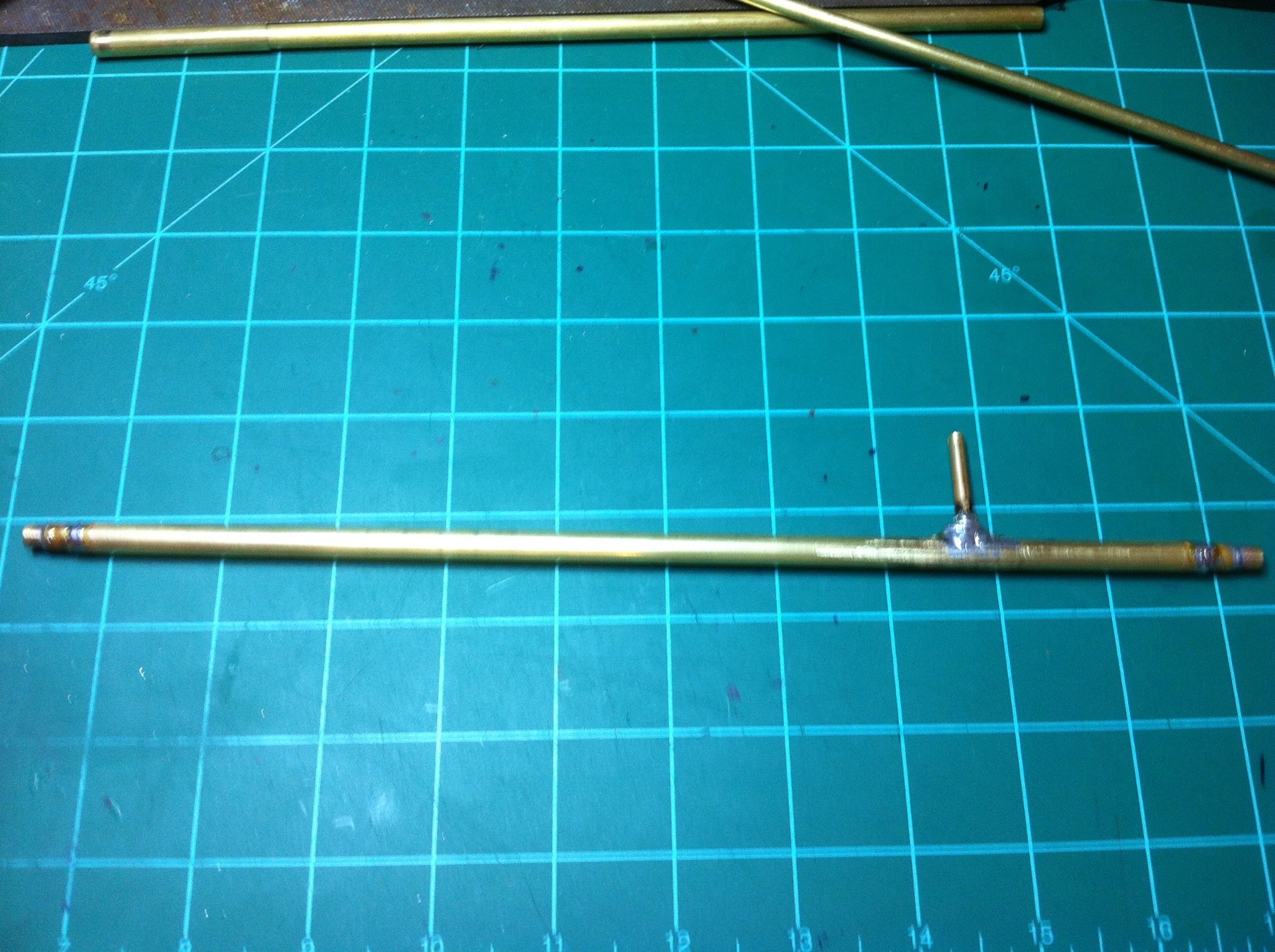
The stuffing tube is a tube that the shaft will spin inside of. The stuffing tube will have grease/oil in it. The stuffing tube will run from the inside of the hull to the outside, but the grease inside will keep water from getting into the hull via the tube. I started building the stuffing tube by taking the tube that slid over my 3/16″ shaft perfectly and cut two 1″ pieces of it. I then took the next larger size of tubing and again I cut two 1″ pieces. I then took the smaller sized 1″pieces and stuck them inside of the larger sized 1″pieces and soldered them together. I soldered the tubes where the smaller sized pieces stuck out of the larger sized by 1/4″. At this point I had made the two end bushings of the stuffing tube. Then I laid my shaft on the desk and beside it I laid my two stuffing tube bushings I made next to the shaft where they will go. I then got the largest tubing I bought (the one that the two bushings will slide snugly into) and laid that next to my shaft and bushings. I then marked and cut the large tubing to the right length. At this point I was ready to solder in the bushings to the ends of this tube, but I then started thinking. . .
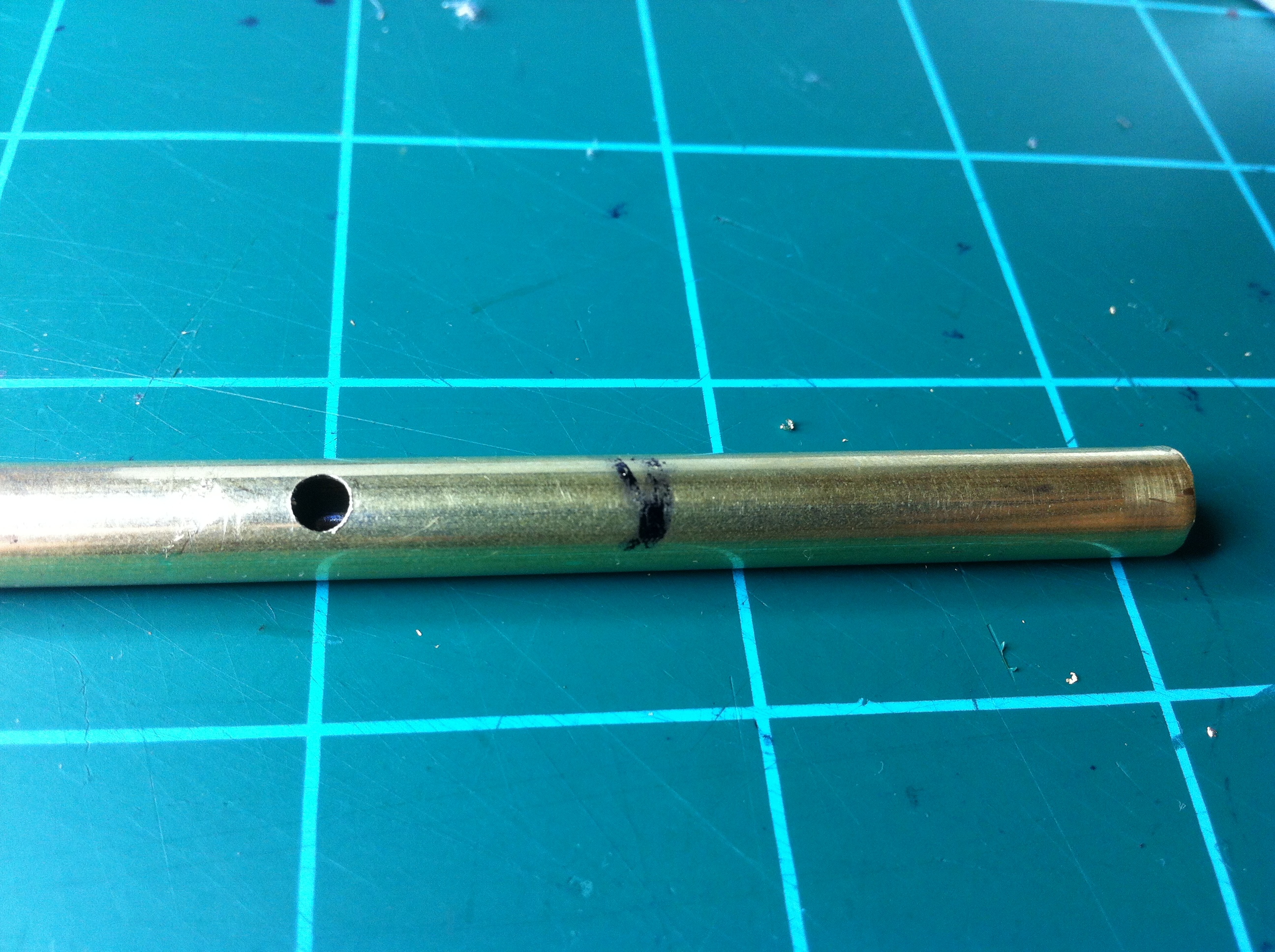
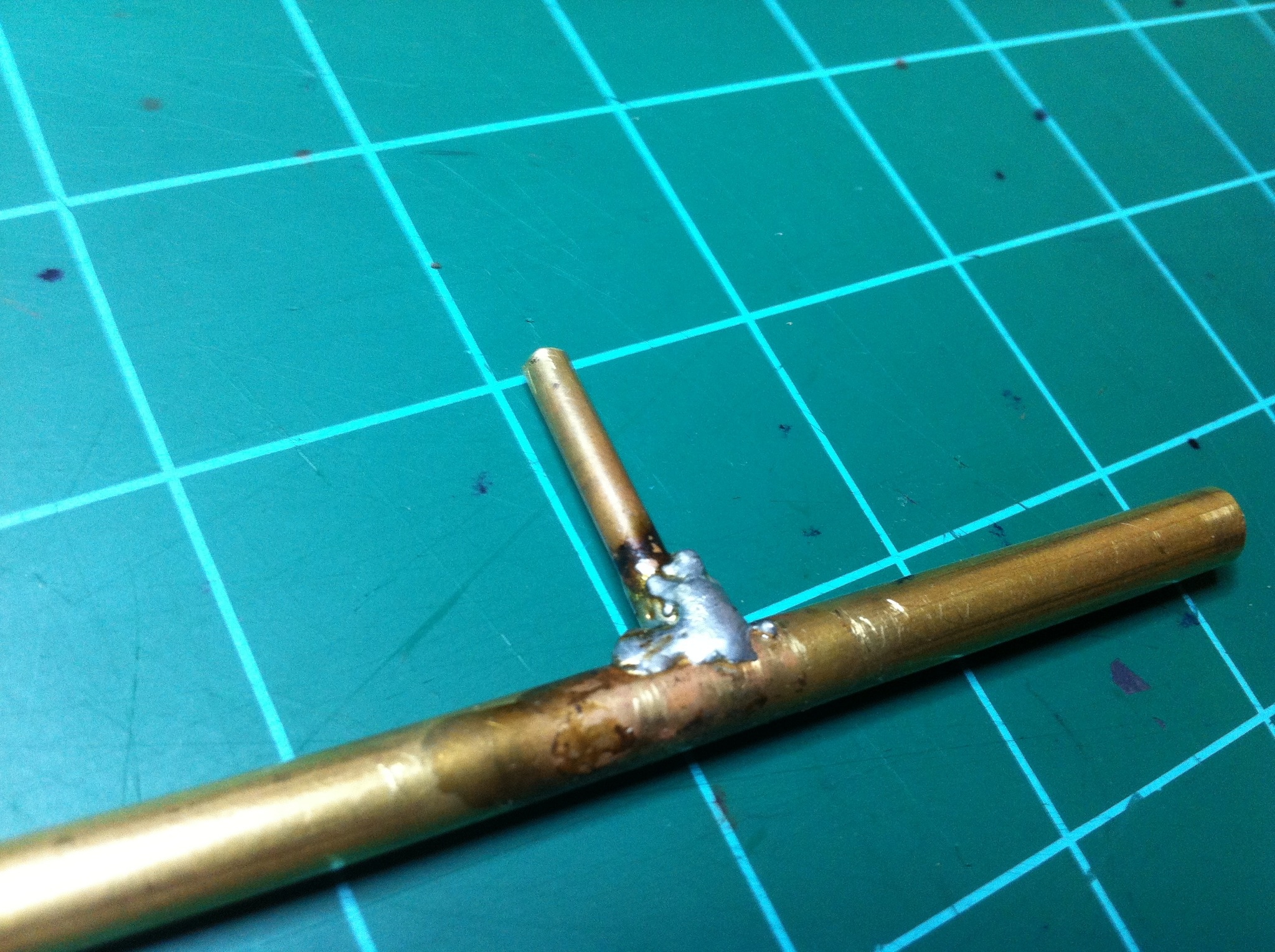
I thought, “How am I going to get the grease or oil into this stuffing tube after the boat is built. Sure I could stuff some grease in there now, but when I put the shaft in it will push some of it out and be a mess. Also if I put grease in now there will be no way to get a good solder joint on these bushings.” I decided then to solder a lubrication tube onto my soon-to-be stuffing tube. Using my Dremel drill press, I drilled an 1/8″ hole into the side of the tube about 2″ from one end. I then soldered a 1″ piece of 1/8″ IO brass tubing perpendicular to the large tube at this hole. This tube will allow me to use a syringe to pump some grease or oil into the stuffing tube. Now back to soldering the bushings. . .
Okay, so I stuck the bushings into either end of the large tube with the bushings sticking out 1/2″ past the end of the large tube on both ends. Then I soldered the bushings into place. The stuffing tube is now complete.
I will show how I made the rudder assembly next week . . .

One thought on “Homemade RC Boat: Part.1”
Comments are closed.